Tuesday, 23 September 2014

Training For Gaining

A visit to any gym at a peak time and you’ll see it all. Some might be lifting heavy while others might be working with lighter weights. Then you’ll get the members who spend hours on the cardio machines leaving a trail of sweat behind them and then you get the ones who train in a sweat jacket like they’re trying to make weight for an event. The interesting part is that often they all have the same goals which are to build muscle and lose fat.

In this article I’ll be looking at how to train for gaining muscle and what different types of training routines are commonly used by gym members and I’ll try to include examples of when I’ve used them myself.

Types of Muscles

Some of the boring stuff first. Muscles in the body can be split into three main categories which are smooth, cardiac and skeletal muscle. 


Smooth muscles are found in organs of the body where movement is necessary to perform their task. For example the stomach needs to churn food and the intestines need to move this along further down the digestive tract which is done by smooth muscles found in these organs. Smooth muscles are not consciously controlled. Cardiac muscle is found in the heart and also contracts involuntarily. Finally skeletal muscle is controlled consciously and is what enables us to move around. This is the muscle we are concerned with building and making bigger, (not to neglect the importance of having a big heart).


Skeletal Muscle Hypertrophy

Skeletal muscle can be trained and as a result of this training it will adapt. These adaptations can vary but we’re interested in making it grow. This adaptation is called hypertrophy. For a muscle to grow it must be subject to a certain stress which we apply by forcing the muscle to perform a movement against resistance. When the muscle is continuously subject to this stress it begins to adapt. When this stress is removed the muscle will tend to revert back to a smaller size as it doesn’t see the need to remain big and maintain this adaptation. This is seen in astronauts who spend a long time in space.  As there is no gravity in space the resistance on an astronaut’s body is removed and the muscles in the body have no resistance to work against. They lose muscle size very quickly and regain this muscle size when they reintroduce the stress on their muscles caused by gravity on Earth.


An astronaut waving bye to all his gains :(

So to get a muscle to continuously grow we need to keep training it and furthermore we have to keep increasing the stress we subject the muscle to. This is known as progressive overload.

Progressive Overload

Using the astronaut example we can see that when they are back on Earth they go back to their original size but they won’t continue to grow past this. This demonstrates the importance of progressively overloading the muscle for it to adapt beyond its current size. If the gravitational pull of the Earth became stronger overnight we would all become swole in a few months just by keeping posture against this increased force.

Now there are a number of ways with which we can overload the muscles and apply stress to stimulate growth including increasing weight, increasing reps and sets and increasing how frequently the muscle is trained.

Thinking back to all the different people in the gym doing all sorts of sets and reps ranges you can see that people tend to differ in what they believe is the best way to stimulate muscle growth. There have been many different routines that have incorporated different techniques to overload the muscles such as forced reps and drop sets and many people tend to stick to certain ways to overload the muscle simply due to preference but few look into what works best.

Most training routines will work and cause some growth in muscle size but whether or not they are the best for muscle growth is debatable. Two of the most popular training routines, HIT and High Volume Training are where a lot of these techniques stem from and they have been adapted in many ways.

HIT (High Intensity Training)

Popularised by Mike Mentzer throughout the 80s and later adapted and reintroduced by Dorian Yates, HIT is a style of training which many lifters swear by. This style of training focuses on working towards a max effort set where you will perform certain number of repetitions which usually fall in between a rep range of 6-8 reps where the aim of the set is to take your muscles to complete failure. Complete failure is when you cannot perform another rep without sacrificing form and this was thought to be the ultimate stimulus for growth by HIT fans.


Dorian Yates, HIT Advocate


The sets building up to this max effort set are often considered warm up sets and are not taken to failure. When you are on your final set a training partner or spotter can be quite important and can help you perform assisted reps or other techniques such as rest pause reps can be used if training alone. Using this style of training you would usually train each muscle once a week or once in a micro cycle (more on training cycles in the follow up to this article).

Now the idea of HIT training was to progressively overload the muscles by continuously adding weight to the bar. This is where the limitations of HIT training begin as there is only a certain amount of weight you can keep adding. Although strength does increase over time, it tends to increase at a diminishing rate. So you notice that your strength goes up slower and slower over time. Relying on this as the only variable to change cannot be the best form of overload. This is probably the main drawback of this type of training. Not to say that it doesn’t work, but it isn’t the best way to train for hypertrophy.

From my personal experiences with HIT I found that as a beginner I did see results and some of my biggest increases in size and strength came from HIT training. But I put this down to using this training early on in my lifting years at a point where any routine would yield significant results if performed consistently. I was still training with a HIT routine until a few years after having experimented with other various other routines but I felt that it wasn't working as well as it had done before and I decided to move away from it and try a different approach.

Volume Training

Although volume training is not really a strict category as much as HIT training is, it is often used to describe routines that have a high number of sets which are taken to a high number of reps. These types of routines are typically the ones shown in bodybuilding magazines where each muscle is hammered by using 4-5 exercises per body part with 4-5 sets per exercise where you can perform up to 20 reps per set! (hence the name volume training).

Arnie took a high volume approach to training and a quick search of any of his routines that he used shows that he was a big fan of performing a high number of sets per exercise.

Arnie, Showing off his pump


The aim of volume training is to work the muscle in a way where you fatigue it over the course of a workout and often each muscle is trained once a week similar to the way you would train using HIT. Volume training uses various techniques to induce overload such as drop sets and super sets and a big focus of workouts is to get a pump where your muscle is full of blood from all the sets and reps performed. Arnie was a big fan of the pump as most of you know.

When I tried using a high volume approach to training I can say it was probably amongst the most enjoyable workouts to begin with but over time I found there was little structure to the routines and I would jump on any machine and just perform 4/5 sets on that particular exercise. One problem with this was that it was almost impossible for me to track progress as I didn’t know if I was getting stronger at a particular movement. I also found that volume training took a lot of time and I could be in the gym for many hours most of which was training time and not much rest time.

So What Works Best?

Both of these approaches to training can get you results but I don’t believe that sticking strictly to one method is the best way to approach your training. Having a routine which involves a certain amount of HIT work and high volume work can work a lot better. So this can be done by having sets where heavy weight is lifted for a shorter number of reps and having a certain amount of reps where lighter weights are lifted for a higher number of reps.

The HIT training methods and volume training methods are just two categories which are often considered to be at opposite ends of the spectrum when it comes to training variables and they directly focus on the two primary routes to achieving hypertrophy which are myofibrillar hypertrophy and sarcoplasmic hypertrophy.

Myofibrillar hypertrophy is when the muscle fibres are growing larger and this is often the focus of HIT or tension training where there is particular emphasis on causing damage to muscle cells through time under tension and heavy resistance. Sarcoplasmic hypertrophy is the increase in the muscles energy stores, namely glycogen. Volume training seems to be designed to achieve sarcoplasmic hypertrophy where the high number of sets and reps deplete these stores with the aim of achieving super compensation after the workout once your muscle has adapted and is able to hold more glycogen than before.


Although these are two different routes to achieve hypertrophy most workouts will achieve an overlap and give the trainer aspects of both types of hypertrophy.

Some may make an effort to focus on one particular type of hypertrophy in the belief that it gives their muscles a better look. Supporters of HIT training argue that myofibillar growth keeps them looking denser and less puffy whereas volume training may not achieve this type of look for their muscles. Going by this, volume training might not actually be the best way to get a leaner look and there certainly isn’t any rationale behind switching your whole workout to a high rep, light weight routine which is what many people do when they’re looking to cut (people who say they’re toning aka toners). It’s probably the worst thing you could do when you’re trying to maintain muscle while losing fat but I’ll write a whole article on that alone, this is training for gaining!

Toner


Finally, I want to talk a bit about power training. Power training is where a large load is lifted for a short number of reps creating enormous tension on muscles. This can be thought of as an extreme at the opposite end of the training spectrum to volume training as there is hardly any depletion of energy stores apart from creatine phosphate and ATP. Power training is usually performed on compound movements such as squats deadlifts and bench press with a break of over 3 minutes per set to allow creatine stores to be replenished.

Power training, apart from creating the largest tension on muscles also creates the biggest strength adaptations resulting in strength gains. However, since the time under tension is not as long as it might be while using a HIT training routine or even volume training because of the lower rep range, power training shouldn't be used alone for achieving hypertrophy but is a very useful addition.


I’ve found that since I’ve started power training my strength increases have complemented my hypertrophy gains and also I’ve found power training to be the most enjoyable type of training, apart from when I almost broke my back. Adding weight to the bar and aiming to beat your previous best can be a highly motivating factor and I’ve found that it helps me make consistent progress. Adding a number of power sets to your workout can mean you’re spending a lot more time in the gym because of the rest needed in between sets to fully recover which is something to consider when designing your routine.


Putting it Together

Now that we’ve covered both HIT and Volume training and understood how they can achieve myofibillar and sarcoplasmic hypertrophy we can start to make a routine with the addition of some power work to help some strength gains.

Where most micro cycles will train each muscle once per week there has been a lot of research showing that this isn’t the optimal way to train. Where one might perform 10 sets on a muscle group they would be better of splitting that workout into 2 separate workouts both consisting of 5 sets. This is because you get to have a better workout each time as you aren’t going to be exhausted half way through the workout. More importantly, this allows your muscles to have twice as many periods where it has been stimulated for growth allowing greater muscle protein synthesis amongst many other factors which add to your gains.

When you begin training each muscle twice a week from having trained it once a week for most of your life you might notice that you find yourself to be very sore or still fatigued from your previous workout but it is important to push through this as it only lasts a short number of weeks after which you adapt to the increased frequency.

So when training each muscle twice a week it doesn’t necessarily mean that you’ll have twice as many work outs because you can begin to pair more muscles together since you won’t be performing as many sets as you might have done before. Also you want to structure your routine so that you can include some power work along with tension work and a certain amount of high rep work so that you get the best of strength gains as well as myofibillar and sarcoplasmic adaptations. I like to perform most of my power work towards the start of the week and then perform the lighter work towards the end of the week as I find this to be the best way for me to lift the heaviest weights in the power workouts.


The routine that I’ve stuck to for the longest since incorporating these techniques has been an upper/lower split where I train both upper body and lower body twice a week. I focus on power workouts for the first two workouts and the second set of workouts would focus on a higher rep range and more tension and high rep work. This can be further broken down into smaller workouts if you find that some workouts are becoming too long but this depends largely on how much time you have to go to the gym.

Also an important factor when training is to keep a track of what you’re lifting in the form of a training log. This is critical to progress because it helps you understand your improvements in strength and allows you to better achieve progressive overload.

Furthermore, I also like to keep a track of rest time in between sets and typically like to keep them within the same range throughout my workouts. This eliminates any changes in strength being down to a longer rest and I get a better understanding of my strength gains. Rest periods are usually a between 1 minute – 90 seconds for high rep ranges and 90 seconds – 2 minutes for any tension work that falls into the 8-12 rep range. With power work I’ll take as long as I feel I need but I still keep a record of how long was taken which is usually anywhere between 3-6 minutes.


I’ll leave here for now and look more into routines in the following article and look at exercise selection. I’ll also start look at periodization and different ways to keep the gains coming while breaking through plateaus. I’ll also be explaining how training hard and training smart are two very different things and it’s not always best to take yourself to failure each time especially if it’s going to be at the expense of sacrificing total training volume which is the ultimate growth stimulator over time.

Monday, 1 September 2014

Building Muscle

It’s about that time. The Earth is embarking on its journey which begins growing the distance between the northern hemisphere and the sun. Days are getting shorter and gradually becoming colder. The layers of clothing are coming back on and you’re digging out your hoodies and sweatshirts that went missing for summer. But amongst all this something far more important is going on. More important than the changes in celestial objects and their position in the cosmos. It’s the start of something special. At the back of every gym rat's mind they've started planning something. It’s been a lingering thought throughout much of the summer cut but the time is finally here. Its bulking season!

Time to Bulk

Before we start talking about bulking lets quickly differentiate between the two main phases of a bodybuilder's season. Professionals refer to them as on season and off season but most people refer to them as a cut and a bulk. When pros are on season they are looking to get ready for stage and reach their lowest body fat percentages to show off their muscle. During the off season they will be aiming to build mass and sacrifice their stage condition to optimise the muscle building process.

Very extreme example of a bodybuilder during a bulk and after a cut

Most people who pursue bodybuilding as a hobby will use the winter months to bulk up and build muscle mass. This isn't always the case for professionals as they typically use contest dates to determine when they transition between a cutting phase and a bulking phase. The biggest bodybuilding contest, Mr Olympia, takes place in October. So Phil and Kai, you might not relate to this article as much the regular gym rat but I’ll try to write one aimed at pros some time in the future.

Now for someone to add muscle mass to their physique they need to be continuously training hard and eating right. These are the two fundamental aspects of gaining muscle and this article will focus on the nutritional side of things.

In this article I’ll be looking more at how to adjust your diet for a bulk and what you should expect in terms of mass gain. In a later article I’ll begin to talk about what I’ve found to be the most effective way to gain muscle through resistance training.

Transition from a cut to a bulk

Ever been in the situation where you finish a cut and want to start throwing the ice cream and pop tarts down your face. It’s allowed now right? It’s ok I’m bulking. Dirty bulk. Mad gains. Let’s do this. Yeh buddy!


Much of this is fuelled by the anticipation of entering a bulk (which is what I was trying to capture in the intro) and the psychological stress that a cutting phase can cause. Even when done gradually and effectively, when you reach a low enough body fat percentage you’re going to find it hard to maintain. It’s not where your body naturally feels comfortable. Please note, I’m talking about a level of leanness where you see striations in muscles you didn’t know existed and veins that resemble a road map.

For many people they will find they begin to lose their conditioning very quickly. At the end of a cut your body is primed for storage. You’ve been in a caloric deficit for a fair amount of time and your hormonal profile is geared towards storing fat. Different individuals are more prone to the effects of exiting a cut but everyone will be affected to some extent.

How to Minimise Fat Gain

At the end of a cut your maintenance calories are going to be far below what they were when you started your cut. Some people might try jumping straight back to what they were eating to begin with assuming that this is still their maintenance level but this is far from accurate. The level of calories that you finish your cut on is close to where your current maintenance will be assuming you have gradually lowered calories throughout the cut while breaking through plateaus.

To begin your journey back to where you were eating you will need to start adding in calories gradually. Usually increasing calories by around 2-4% a week will be a good aim to keep your body fat levels in check while increasing the amount of food you’re eating. Below I’ve attached my personal reverse diet plan which I am using to phase out of my cut and into a bulk.


From the screenshot of the excel spreadsheet you can see at week commencing 25/08 I began my reverse diet aiming to eat around 70g, 240g and 230g of fats carbs and protein, respectively. This was roughly around where I finished my cut. On the last week of my cut fats were around 5g below this, carbs were around 20g below this and protein was around 10g above this. 

As the weeks go on I plan on increasing fats by 2g a week and raising carbs by 20g a week while lowering protein by 10g a week. The increase in carbs by 20g and decrease in protein by 10g will give a net calorie increase of 40 calories. The reasons for lowering protein will be explained in more detail in a following article on how to eat for a cut, but briefly, you need more protein when you’re cutting and relatively less when you’re bulking. However, it is important to realise protein is still very important when you're looking to gain muscle and this is why once I reach 200g of protein I will stop reducing it any further and decrease the carb intake increment to 10g from 20g.

I am aiming to get to my previous maintenance calorie intake in a 10 week period so by the last week of October I’ll be eating around 90g fats, 370g of carbs and 200g of protein giving me a total of just over 3000 calories. Just in time for Halloween so I'll be able to enjoy my treats.

This is just the theoretical framework for what I am planning to do and things in real life may differ somewhat which is why it is important to keep a track of weight throughout. I like to weigh myself every morning and take an average weekly weight reading and see how that compares to my average calorie intake. If I see that my weight is going up too fast it is likely fat gain and I’ll have to take the foot off the gas, so to speak (or the roti off the tava).

Now We’re Gaining

Once you’ve got to around your pre-cut level of maintenance calories and are finding that your weight gain is plateauing you’re ready to transition into a bulk where you begin to add new muscle, not just regain muscle lost from your cut. 

This doesn’t mean you should increase calories by 1000+.Many people do this and gain fat faster than muscle. You can only gain so much muscle in a given time period and adding excess calories get stored as fat. Adding excess fat will only mean you have to cut for longer or cut more aggressively if you want to get to your desired body fat level. Both of these measures create a more catabolic environment that could have been avoided with minimal fat gain so always increase calories as needed.


How Much Do I Aim to Gain?

The amount of muscle you gain depends on many factors including genetics, years of training and training intensity. Although muscle gain is not an easy process, for some people it is a relatively easier process compared to others. This shouldn't be used as an excuse by hard gainers but rather used to understand that they need to make adjustments to their diet and training and that their calorie intake will be different to someone who is of a similar size but gains muscle easier.

Genetics can also cap your muscle gaining abilities. There is only so much muscle you can gain and as years of training progress the muscle gain will be slowing down at an increasing pace. So someone who has been training for 10 years may be close to their potential and will probably notice very little muscle gain during a bulk compared to a new starter who would experience their best gains during their first few years of training. So when deciding how much you’re aiming to gain during a bulk the level of experience should be something which is considered.

The best way that I suggest to bulk is to put yourself in a caloric surplus and continue training hard whilst monitoring progress through the scale and through the mirror and make regular adjustments when needed to break through plateaus. This will help you gain at your optimal level where fat gain is minimised.

How to measure Progress?

The mirror can be very useful when measuring progress when used along with weight measurements to help you decide if your weight gain is muscle or fat however it can also be misleading by people who see fat gains as muscle therefore it shouldn't be used as the only measure. Strength gains can be used to help understand whether the gains you see in the mirror are fat or muscle if you have a difficult time distinguishing between the two. 

As you gain muscle your weight will begin to increase through the new muscle built and the glycogen that this newly built muscle can store. When you have lower levels of glycogen your weight will drop which could be mistaken as muscle loss. This is why someone who is incorporating a carb cycle into their diet routine could be confused and think they are losing muscle on a bulk but taking a weekly average of weight should 
help resolve this potential confusion.


Individual Differences

One thing that is very important to recognise when adjusting calories, be it for a bulk or cut, is that individual differences will come in to play a lot. You may know people who need a lot of calories to gain muscle and others who can do it with fewer calories while staying at their optimal muscle gain level. This is why it is very important to track intake and learn your body’s response to different increases in calories and where those calories come from. This ties in closely to different set points and varying metabolic flexibility which will be discussed in detail in the future.

Bulking can be an exciting time for many but others who are concerned about maintaining visible abs all year round may find that they are reluctant to increase calories. This means they do not gain muscle at a significant rate. Even if you bring in calories slowly and keep training intensity high, some fat gain is inevitable during a bulk, (unless you’re a beginner where you may be able to do both in certain circumstances).


Various strategies can be used for individuals who want to stay lean such as carb cycling or cyclical ketogenic diets which some people find very effective for staying lean while bulking. Some find that they benefit from introducing a mini-cut during their bulk where calories are dropped for a short period and then raised again.

Others have a problem with how much they eat and find it hard to build an appetite to get enough calories in while some think they are eating more than they actually are. This is common problem amongst hard gainers and can be easily fixed by tracking calorie intake accurately. Once you see how much you’re eating you can begin to make adjustments and often self-proclaimed hard gainers are just individuals who aren’t eating enough. There are many ways that someone can help fix this problem including low intensity cardio and changing food sources to increase appetite and fit more calories into your diet.   

I’ll begin to go more in depth into these areas in future posts but this hopefully sets some bulkers up for some nice LEAN GAINS! 

Tuesday, 26 August 2014

Losing Fat

At the peak of summer it’s prime time to be shredded. Get those abs showing or just be able to wear clothes that are somewhat comfortable without showing off the layer of fat you might have accumulated during the colder months where you could hide it all behind a few layers of clothing. So let’s hit the gym and jump on the treadmill, go on a new diet and hope to see some results.

Most people will mindlessly do this without actually knowing what they are trying to achieve and they can mess things up pretty bad or experience either no significant fat loss or some pretty slow results which aren’t worth their effort. Some have a rough idea of what they are trying to do but do too much at once and results slow to a frustratingly slow pace and you’re left with confusion and often giving up.


In this article I’ll try and explain what has worked best for me and how things may differ for people with different fat loss goals. That is, people who are just worried about losing fat or people who are trying to hold on to as much muscle as possible whilst losing fat. The latter is the harder and more complex of the two and it’s usually individuals who have been trying to bulk up leading up to summer that are faced with this task. It does take a lot more effort and is a tough challenge to hold on to all the muscle you've built since your last cut but it’s a lot more impressive when done properly.

What is fat?


Fat, apart from being a macronutrient, is an energy store. In fact, fat is the body’s most efficient energy store with a caloric value of 9kcal per gram of fat. It is easily stored in the form adipose tissue and is there as a vital survival tool that provides a source of energy in times where you may not have eaten for a while. This survival need isn’t as important now as it was thousands of years ago for humans. Now, unless you make a sustained effort to reduce your body fat stores they’ll probably stay there or grow larger seeing as you’re not likely to be short of food anytime soon.

The build-up of fat stores signals that you are consuming more energy than you are expending. Going back to the basics we need to look at this from a simple equation of energy balance.

To be alive your body uses energy i.e. you burn calories. Even to sit there and do nothing all day your body is burning calories, because there’s always something going on, even if you aren’t consciously aware of it or if you can’t see it happening. Now let’s add on the calories you need to carry out your daily tasks such as walking up the stairs, brushing your teeth, walking to your car, driving your car. All these activities burn calories. If you’re following a regular workout routine the energy requirement goes up further. How do you fulfil these energy requirements? Through the food you eat.

If you are burning 2200 calories on a daily basis and you are consuming 2200 calories on a daily basis, theoretically your weight will not change. You will be eating at maintenance. In order to drop fat you’ll need to be in a caloric deficit. To be in a deficit you need to be eating fewer calories than you are burning and when you create this caloric deficit your body turns to stores of energy which includes body fat hence a reduction in body fat.  

Fat is accumulated when you are in a caloric surplus, which is when you are consuming more calories than you are burning. When your body has enough calories to complete all tasks and has spare left over it puts these away in fat stores for later use. Whether they are used is up to!

The equations below should help sum up what I’ve just explained.

Calories In – Calories Out < 0 you have put your body in a fat burning environment.
Calories in – Calories Out > 0 you have put your body in a fat storing environment.

Please note this is a very simplified version of events. VERY simplified. So simple that you should be able to learn and manipulate it and get some sort of fat loss results.

So what can you do to reduce your body fat?

You have two main tools in your arsenal (no, not Ozil and Alexis). The first is eating less or reducing the ‘Calories In’ part of the equation above. The second thing you can do is increase your activity levels which would be increasing the ‘Calories Out’ part of the equation. Both of these will help bring the equation to equal less than 0 meaning that your body needs to turn to stored energy. Often people will do both in an attempt to speed up the process. Note I say attempt. Often this overkill leads to a failed attempt. I’ve overkilled and failed and tried harder and failed harder.

How should you approach your fat loss goals?

Timing it Right


The approach one takes to lose fat depends a lot on how much fat they hold and how much they want to lose. But for most people they will want to trim down the extra few pounds of fat anywhere around 10lbs of fat is quite an achievable target in an 8-12 week period.


Its all an illusion! Weighing around 90kg around 2 weeks into my cut on the left, weighing 85kg on the right 10 weeks down the line. Around a 10lb drop in bodyweight, most of which was fat.

For someone who is looking to hold onto as much muscle as possible during the fat loss period it is important to start transitioning to a fat loss phase with enough time before you want to be in your final form. Starting at the beginning of summer would mean you’re going to be in shape by around mid-late summer which is a bit late for most people. Starting around 8/12 weeks before you want to be in shape is probably around a good time to give yourself a good chance to hold onto most of the hard earned muscle you have built. Again this does depend a lot on the individual and how much fat they want to lose .

The importance of timing it right is mainly because of impatience leading to drastic measures. People who are not happy with the consistent slow loss of fat will begin to drop calories at a greater rate causing a larger caloric deficit while adding more cardio or longer workouts to go with this. This can lead to muscle loss which is not what you want. Even for people who are looking to lose fat without the worry of losing muscle mass it is important to stick will slow and steady results.

For people who aren’t as concerned about losing muscle mass I would think that you can keep dieting slowly as long as you still see results. The approach would be somewhat different and dieting decisions would be determined more by the way you feel and when you are happy with the results rather than looking at weight on the scale and being more concerned with body fat percentages. 


Nevertheless, it would be important to have a time frame in mind and have a set target milestone along with mini milestones along the route. The reason I say this even though they can be relatively more aggressive as they are not worried about losing muscle mass in the process, it still takes the body time to adapt to changes in diet and training so that it can keep using fat as the preferred energy source at an efficient pace.

I haven’t really had the aim of losing just body fat without maintaining muscle mass and when I did try to attempt this for a brief period I didn’t know what I was doing so I basically did what most people do and what most people advised me to do. Eat less, stay away from carbs (especially at night), do a lot of cardio and make sure it’s a torturous process. This is never going to be a maintainable way to keep the body you want and will result in you packing the fat back on after falling off track from this extreme diet.

Changes in Diet and adding Cardio

Now to lose fat you need to put yourself in a caloric deficit as explained earlier. To do this you need to know what your maintenance calories are. For someone who is regularly tracking their eating this will be something that they have a rough idea of. For those that don’t regularly track their eating it can be a bit trickier but the best way I have found in helping people understand their maintenance levels in by telling them to start tracking without changing their regular eating. Once they have tracked for a couple of weeks we know what they’re average weekly caloric intake is and we can use these figures along with their average weekly weight to determine whether they are in a caloric surplus, deficit or if they are consuming at their maintenance caloric level. Obviously we are making some assumptions here such as the activity level of these individuals and eating habits have not changed dramatically and they have been following more or less the same routine for these tracking weeks.

Now we can make a rough estimate on what this persons maintenance levels are from seeing how much their weight was changing and how many calories they were eating. So from maintenance we need to drop calories to start the weight loss process.

How many calories do you need to cut out?

Theoretically, one lb of fat has an energy value of roughly 3500 calories so to lose a lb of fat a week you need to be in a caloric deficit of 3500 calories a week or 500 calories a day. Once you know your maintenance calories you can deduct 500 calories from this and you’re left with your target calories for losing a lb a week.


Once you’ve started eating at this level you should experience some changes in weight as check your average weekly weight. As long as you are losing weight at a good rate you should stay at this level of calories until things start slowing down. At this point you can further reduce calories or increase activity levels through adding cardio sessions.

There is a lot of debate about whether cardio is essential to reducing your body fat and the simple answer which you’ve probably gathered by now is, no. Cardio is not essential but being in an energy/caloric deficit is. However, cardio can still be a very effective tool if used properly and different forms of cardio are more effective for people with different goals and preferences.

It is important for each individual to understand the way they respond to different changes and how their body responds to different drops in calories and additional cardio. Also constantly checking progress according to personal targets is important when deciding how changes should be made but more importantly it is crucial to set realistic goals in the first place. This is where most people can get confused and start losing track of how to change things when their bodies begin adapting to the lower calories or increased activity.

Obviously there are many things which haven’t been looked at in detail here such as macronutrient composition of your diet once you know your calorie target and how you should divide your efforts between dropping calories and adding cardio and how much should each effort contribute towards fat loss goals. Also there is a lot more to be said on how someone who is looking to maintain their muscle while losing fat can use different dieting strategies and techniques to help speed up the process and get past difficult sticking points which are usually different for each individual depending on their set-point. 

People with different somatotypes will need to approach fat loss in different ways including how long they can stay in a caloric deficit while minimising muscle loss. Somatotypes are basically different body types and usually people have a basic idea of which type they fall under. Some are prone to fat gain while others may find it harder to put on fat. Some people tend to maintain muscle easier than others who may find that they lose muscle relatively quickly when entering a caloric deficit. These are all factors which need to be looked at for someone who is looking to lose fat and especially for someone who is looking to maintain muscle while losing fat.


Also one very important factor for someone looking to maintain as much muscle mass as possible is lifting weights! There's a lot of misunderstanding about the way people train when trying to get ripped and this deserves its own article which ill post soon.

I’ll try writing a lot more on fat loss soon as it seems to be one of the areas with most interest and there is a lot more to talk about than I’ve covered in this article, but for now this should help you understand how the basic theoretical approach works and how it is important to set goals and track progress while aiming for gradual consistent results.

Sunday, 17 August 2014

IIFYM - If It Fits Your Macros, A Flexible Approach to Dieting

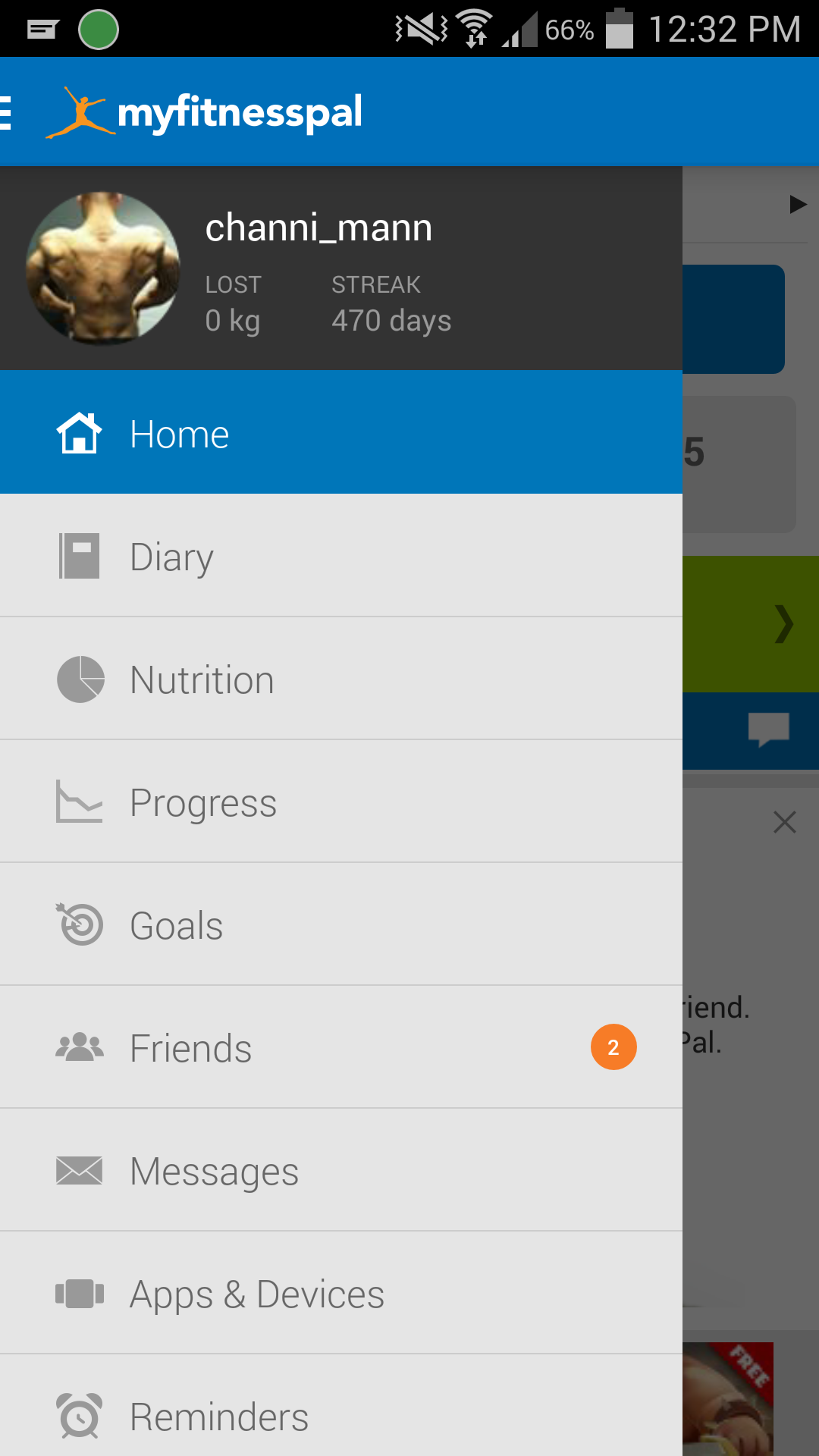
Most people who have done a bit of searching around the internet looking for a diet plan or have spoken to people around their gyms have already come across IIFYM. IIFYM has become increasingly popular amongst gym goers and general fitness enthusiasts. I myself came across this particular approach to helping me structure my diet over a year ago. In fact, since I started following this style of dieting I have managed to log my diet every single day consecutively on myfitnesspal for 470 days at the time of writing this. I’ve found it the easiest way to manage my diet and stay sane whilst reaching my training goals and in this article I'll explain the basics to approach this dieting method.

Screenshot_2014-08-10-12-32-24
A screen shot of myfitnesspal, a mobile app which I use to track my diet. A streak of 470 consecutive days of logging since becoming an IIFYM follower.

In this article I'm hoping to shed some light on what I believe to be a great way to dieting for any goals you have, be it fat loss or muscle gain. This approach eliminates boredom with food when dieting which can be a major obstacle to maintaining a dieting programme long enough to reach your goals. Often people become bored, fed up and stop their diet accepting failure. In some cases the repetitive eating routine with strict restrictions on what you can eat leads to short term compliance followed by an epic binge. I've been there before and I think most people who've tried sticking to a strict diet would say they've experienced something similar.

Since becoming a flexible dieter I find it so frustrating to hear people talk about how they're planning on eating clean and how they will avoid all "junk food". The first question that pops to my mind is how maintainable do you think this diet can be? I mean, how long do you realistically think you can go without eating a chocolate bar or having a takeaway meal. Forever? Even long enough to reach your target weight?Probably not. A diet must be maintainable for you to be able to see consistent results which will last. The key thing here being results which last.

Now, obviously for a bodybuilder or physique competitor there are periods of the year where you will be looking to gain weight and during this time period you're going to put on some fat while packing on some muscle. But even in the case of a bodybuilder who is looking to bulk up I think that flexible dieting habits help an individual reach their desired weight without adding on as much excess fat as they might have with a "dirty" bulk. Also for "clean" bulkers there are many benefits of using a flexible dieting approach for psychological reasons as well as physiological reasons. Apart from the obvious reason of increasing chances of compliance, eating too many foods that are typically labelled "clean" not only leads to boredom but also causes digestive issues. Sometimes you might be better off going for a pop tart rather than the oatmeal. Trust me!

So What is IIFYM?

To start off its important to understand that IIFYM is not a diet but rather a dieting philosophy.  IIFYM simply says that you can eat whatever you like as long as you reach your daily macro-nutrient goals, which are you goals for carbohydrates, fats and protein eaten in a day. It completely eliminates labelling foods clean and dirty and this makes sense since your body doesn't know how to distinguish between clean and dirty foods either. What defines a clean meal? You probably imagine a plate full of vegetables, maybe with some lean meat. So did I. I don't know why but we all have the same kind of image of what clean foods are but if you actually try to define a clean food you'll find it hard to come up with an unambiguous definition. After understanding that our bodies don't decide whether a food is clean or dirty before digesting it accordingly, but only look at the nutritional content of the food during digestion, I began my transition to becoming a flexible dieter.

Macros and Calories

If you hit the set macronutrient targets, you're reaching your calorie goals by default so there is no need to count calories. This is because 1 gram of carbohydrates and 1 gram of protein both contain 4 calories and 1 gram of fat contains 9 calories so if you were to set yourself a target of eating 200 grams of carbohydrates, 150 grams of protein and 70 grams of fat in a day that would equate to:

Calories from carbohydrates: 200x4 = 800
Calories from protein: 150x4 = 600
Calories from fat: 70x9 = 630
Total calories: 800+600+630=2030

Often people would find out how many calories are needed to eat to reach a certain body composition goal and then work the other way to find out how those calories are going to be split between the macro-nutrients. So you may decide that you are going to be eating 2400 calories to maintain your current bodyweight. Now you have to decide how to spilt those calories between the three macros, protein, carbs and fat.

You may come to the decision that you will need around roughly 1 gram of protein per lb of bodyweight to preserve lean tissue mass. If you weigh 200lbs that will mean you’re eating 200g of protein and allocating 800 (200 x 4) calories to protein intake per day. Now you have 1600 (2400 – 800) calories remaining to split between fats and carbohydrates. You could decide that you want to eat around 300 grams of carbohydrates a day to keep your energy levels to the desired level and to fuel your workouts. This would mean 1200 calories have been allocated to carbohydrate intake. This has left you with 400 (2400 – 800 – 1200) calories to consume in the form of fats. Recall that 1 gram of fat has 9 calories so you would simply need to eat 400/9 which is roughly 45g of fats to reach your daily calorie intake of 2400.


So what exactly can you eat?

clean-food-or-junk-food

Anything! Well kinda… That’s the most amazing part of this style of dieting. You can eat anything you want, AS LONG AS it fits your targets for the day. Now this automatically brings some conditions to what you can eat.

Because you have a set target of macro-nutrients for the day and this could rule out some foods immediately. For example if your daily macros allow you to eat 200 grams of carbs, an XL meat feast pizza is ruled out pretty much straight away. But can you eat a slice or two? Sure. So rather than having the food ruled out completely, you are simply controlling portion size. When you label a food dirty and ban it from your diet your craving for it increases. But with IIFYM you can accommodate it into your macros and eat it regularly.

I find that this is probably the most important factor that makes IIFYM so popular and the main reason why I have managed to get consistent results from my training in the time that I've been following this style of eating. When you stop labelling foods clean and dirty and realise that the food is just a composition of fats carbohydrate and protein it becomes a guilt free process to eat the foods you like while keeping on track to reach your goals. Also you don’t have to wait until a cheat day to eat that ice cream or that dessert you've been dreaming about for the past week. You just eat a small portion of it when you feel like it while making room for it in your macro allowance.

This diet also allows flexibility with eating out and going to restaurants for a meal as most places have nutritional information available and if they don't you can usually calculate a realistic estimate. Obviously these meals have to be planned out so that your daily macros make room for your meal which rules out last minute decisions to go for a feast when you have 40g of carbs and 15g of fat left in your allowance with just about enough protein for a chicken wing. But there is flexibility compared to dieting methods that completely rule out eating anything that hasn't been cooked in your own kitchen. You just have to plan ahead.

Some people find the aspect of fitting their meals into their allowance quite fun and rewarding in itself. You will often see flexible dieters posting pictures of ice cream, cheesecake and pop tarts showing off the flexibility of their diet. People look at this and assume that this is all they eat and they must be the lucky ones with good genetics or super fast metabolisms but its just that they've fully grasped the concept of flexible dieting. This is only a small proportion of their diet and the bulk of their diets are composed of what are typically labelled as clean food but its not as fun to post pictures of a bowl of oatmeal as it is to show off the chocolate chip cookie dough pop tart you just ate. I've heard people proudly say that they've managed to eat ice cream and 2 pop tarts while still having space for 100 grams of carbs and all this whilst hitting a healthy fibre goal. It's just a game of fitting in the fun stuff around your macro allowance.

Important Role of Fibre


Another important factor to consider when reaching your macro nutrient goals is that you need to keep an eye on fibre intake. Now apart from the obvious reason of making your visits to the toilet less of a mess and less of a pain, fibre also helps with satiety. Eating a certain amount of fibre in your diet is going to help you stay full for longer and stop hunger pangs that may be experienced with carbs that are lower in fibre or are more sugary. I usually aim to hit around 40 grams of fibre a day and at a minimum will have around 30 grams of fibre. A rule some people go by is to aim for 15g of fibre per 1000 calories consumed.

Having too much fibre in your diet can be a bad thing for digestive health. If your consuming a load of high fibre foods, which is often the case with "clean" eaters and even more so with "clean" bulkers, you can be eating more fibre than you need. Too much fibre can impair digestion and leave you feeling bloated. So for many people who have a high carbohydrate goal as part of their macros, it's recommended that they have some of their carbohydrates from low fibre foods which are usually higher in sugar. This does depend somewhat on your daily carb intake allowance which is why some people have a diet full of fun stuff which wouldn't typically be thought of as healthy but as long as they're within their macros and eating a sufficient amount of fibre there is nothing wrong. I think of fibre goals as important as my macro-nutrient goals so will track them with them just as closely.

Eating Sugar for all my carbs?
retrosweethamper2

A popular question that I’ve come across when talking to people about IIFYM is, can I eat all my carbs from sugary sources if I’ve hit my fibre goals. The idea being that once they reach their fibre goal they can have a load of poptarts or sweets to finish off their carb allowance. The answer I usually give is yes, but warn that it’s probably unlikely they’ll be able to get a whole load of sugar while staying within their carb limit for the day. For example, say you had a carb target of 200 grams for the day and say to reach your minimum fibre goal you needed to consume around 120g of carbs which are rich enough in fibre to meet your fibre goal. That leaves you with around 80g of sugary carbs you can eat which is still a fair amount but not the whole carb allowance can be blown away on sugar!

As explained earlier there will be some cases of people who will be able to eat a large amount of sugar while following the guidelines of IIFYM. This is often the case with people who have a large metabolic capacity, often built through cycles of careful dieting and training, (this will be discussed in depth in a future article). For example if someone needs to eat 500g of carbs a day for them to keep building muscle at a decent rate they will have to get a fairly large number of carbs from sugary sources without overdosing on fibre.

Does it matter which types of fats I eat?


Good-Fats-Vs-Bad-Fats

Another question is whether it is important to worry about the types of fats eaten. Can they all be in the form of saturated fats or should you be eating “healthier” fats such as polyunsaturated fats or monounsaturated fats.

The basic thing to understand is that the most important factor when it comes to deciding what you eat is total caloric intake which is determined by macro-nutrient intake. After this basic aspect of your diet has been perfected you can begin to worry about how the individual macro-nutrients are broken down but that is not something which needs to be over analysed. For the most part, if you are eating a varied diet you shouldn’t have to look into your diet in this much detail but it can be useful for someone who is looking to take their performance to a competitive level as these small details begin to give you the competitive edge. But for someone looking to just get in shape and improve general well-being through training and nutrition you need not worry about such minute details. 80% of your results come from 20% of your efforts – The Pareto Principle. Perfecting the small details will yield only the extra 20% of your total results and will take up around 80% of your efforts. It’s up to you whether you decide to make that effort.

How to Track Macros?
my-fitness-pal1

The easiest way to track macros is using an app on your smart phone. The one I use is called myfitnesspal and has a huge database of foods that have their nutritional value updated by users regularly. You can add your own food and update your diary according to meals and recipes that you regularly eat and there is a function that allows you to scan a barcode to register the food you eat.

The part some people find tricky is weighing their food. I always suggest people weigh their meat once cooked and everything else should be weighed before cooking. Food from packets which is ready to eat can be weighed straight out of the packet and the portion size can be logged on the app according to how much you eat. Obviously if you haven’t got a kitchen scale you will probably find one very useful as estimating usually leads to inaccurate portion sizes. (I'll probably make a separate article on tracking your macros as there are some parts that can take some getting used to and it is often a part where many of the people I've worked with have had trouble in the beginning).

Micronutrient Intake?
ALL-ABOUT-MICRONUTRIENTS-MINERALS

So having understood much about macro-nutrients, we should take a minute to understand what micro-nutrients are and how they play a role in your diet. Where macro-nutrients are counted or measured in grams, micro-nutrients are measured in milligrams (mg). As they are only needed by the body in small amounts they are referred to as micro-nutrients but this doesn’t reflect their importance in a diet. A deficiency in a micro-nutrient will soon catch up with someone trying to achieve their training goals and can lead to health complications in the long run. Examples of micro-nutrients include things such as iron, sodium, calcium, potassium and various vitamins which are important for many bodily functions to take place. A varied diet which consists of a decent amount of vegetables and fruit should be sufficient to cover the micro-nutrient requirements and there is no harm in taking a multivitamin supplement for safe measure. A common argument against the IIFYM approach to dieting is that it leads to a micro-nutrient deficiency. This argument stems from the belief that IIFYM is a diet full of fast foods which are processed and lack in micro-nutrients but this is not the way anyone who is hitting their macros would be eating given that they're consistently reaching their goals for carbs, fats and protein while keeping an eye on fibre intake.

Summing it up

As you’ve read through this you might have become increasingly unimpressed with IIFYM, from what seemed like a new way of dieting that allowed you to reach your goals while eating whatever you want to something that comes with more conditions than you can keep track of, let alone keeping track of your macros! But it doesn’t take long to get used to this style of dieting and it’s actually one which most people can consistently maintain. Consistency is probably the most important factor that makes IIFYM such a good dieting philosophy in my personal experience.

It goes without saying that everyone will respond differently to a diet and training routine and have a different rate of fat loss or muscle gain. But to assume that someone who is following flexible dieting is lucky through genetics or whatever other reason is quite an ignorant assumption to make and is one that is often made by people who are depressed with their strict way of eating and are seeing little to no results. I've been there before but having become a flexible dieter I can see how beneficial it is to being able to stay on track and enjoy the results through a consistent effort. I suggest that if you're struggling with your current diet give IIFYM a go and see how it works for you. Any diet is going to take a certain amount of effort and planning without the help of a personal dietitian but once you make that effort or learn how to track macros you'll be on your way to long term consistent results.

I can realistically see myself sticking to this way of dieting forever which I can't say with any other dieting method I've followed before. Tracking macros is something that you can get used to very quickly although it may seem difficult at first. Also, after some practice people are able to stick to a flexible dieting approach without having to log their macros as they become so used to knowing the macros of the foods they eat. Personally I think that its always a good idea to track macros as it only takes a few extra seconds and I'm quite forgetful so having everything logged on my phone makes sure that I don't lose track of my daily intake.

This should have covered the basics of how to use an IIFYM approach to your eating plan but there are probably loads of other questions that you're thinking of like, how to decide how much you eat, how often you need to eat and when to eat. These questions will be answered in the following articles.

If you found this article helpful please give feedback in comments! Please share!

www.channimann.blogspot.co.uk

Follow me on twitter for tweets
https://twitter.com/channi_mann

Follow me on instagram for a glimpse into parts of my life I feel I need to share, my instagrams become a vlog of me in the gym recently so you'll see quite a few short workout clips
http://instagram.com/channimann

Like my page on facebook for regular posts relating to all aspects of training and nutrition I feel worthy of sharing that may help you
https://www.facebook.com/pages/Channi-Mann/282160031968506

Saturday, 16 August 2014

Hello

So I’ve decided to start blogging to give people an insight into my thoughts on training and nutrition along with things that I’ve found that work for me. Having been training for around 10 years I think I’ve managed to gather enough knowledge and experience to help people in some way.
From my years of training the main thing that helped me outside the gym was reading and educating myself. The first 4/5 years in the gym I spent basing my workouts on random exercises mostly by copying people and doing what the bigger guys in the gym did. Throughout most of my early years in the gym I focused most of my time on upper body workouts making sure I did my bicep curls and bench presses while neglecting other important movements like the squats and deadlifts. It was only until around 2 years ago that I began deadlifting and squatting regularly and a decent training routine soon followed along with a consistent dieting philosophy. Prior to the last 2 years I spent much of my time experimenting with various diet and training routines and consider them a valuable part of my learning curve.
Having tried almost every routine imaginable and testing various diets along the way I feel that I’ve made most progress by taking a step back and making things simple. Understanding the science behind much of what I was trying to do while deciding which aspects of my training and nutrition were yielding the most returns and which aspects were soaking up the bulk of my efforts and hardly making a difference for me in reaching my goals was a huge factor in improving my progress.
I’ve always been interested in expanding my knowledge on training and nutrition and having read hundreds of articles, blogs and books over the years I think I can offer a lot of information to people and I think doing it through this blog is probably the most effective way. Hopefully through all the things I’ve learnt I can help explain things in my own way by using my experiences as examples and get into some interesting discussions about your experiences. Feel free to get involved through the comments, I’ll try to make regular entries as much as time allows me. I do spend a lot of my day in the gym taking selfies or in the kitchen experimenting with new recipes but I’ll try my best.
Hope you enjoy reading!

IMG_20140730_123354
Me trying to copy the iconic Frank Zane pose. Noticed we’ve got the same vein running through our lats. Coincidence? I think not!